 Editorial inspiration
Also in: Short hair
A NEW POSSIBILITY
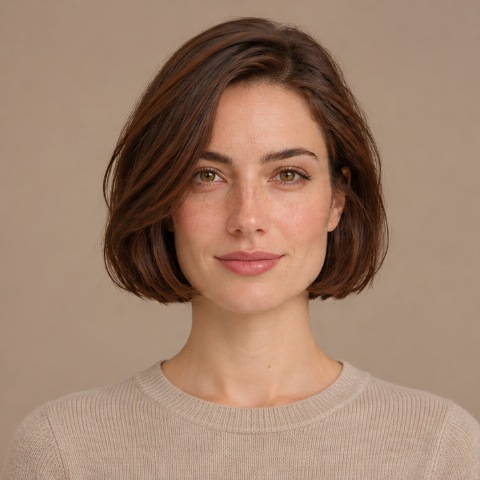
Blunt bob
An even, jaw-length perimeter gives this bob its crisp outline.
- Talk to your stylist about
- Ask to see where the line falls when your head is level.
- Living with the look
- A clean perimeter is more visible on straight hair and softens as it grows.
- A helpful reality check
- A preview cannot predict how your hair will fall, feel or grow. Use it to discuss length and shape, alongside your texture and routine.
What defines Blunt bob?
A blunt bob has a defined perimeter with little visible graduation at the ends. This reference puts that line at about jaw height.
What to look for from the front, side and back
Compare the line where it meets the jaw. Check from the side for a change from front to back, then look at the back for how much of the nape is covered.
What to confirm with your stylist
Point out how solid you want the lower edge and decide where it should sit when dry. Show whether you tuck one or both sides behind your ears.
Compare Blunt bob with nearby styles
- French bob
The blunt bob emphasizes a crisp, even edge. The French bob reference rounds the outline more softly beside the jaw.
- Shoulder-length lob
The lob places the edge near the shoulder. The blunt bob brings that visible line up to the jaw.
- Graduated bob
The graduated bob builds weight above a closer nape. The blunt bob keeps a more even, clearly defined perimeter.
Questions about Blunt bob
Can a blunt bob have face-framing pieces?
It can, though visible shorter sections change the perimeter around the face. Ask to see where those pieces would meet the main edge.
KEEP EXPLORING
All hairstyles Compare related styles.
Editorial inspiration Editorial inspiration
 Editorial inspiration