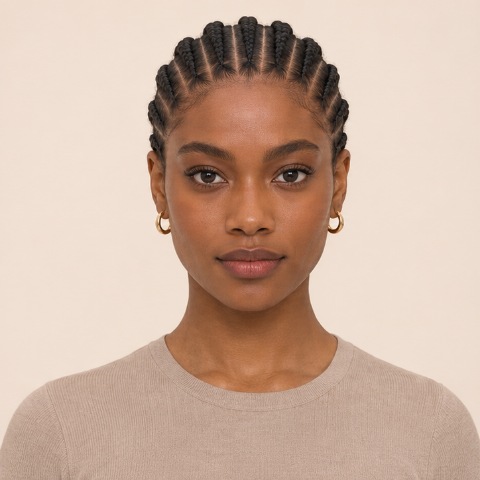
 Editorial inspiration
Also in: Long hair
A NEW POSSIBILITY
Fulani braids
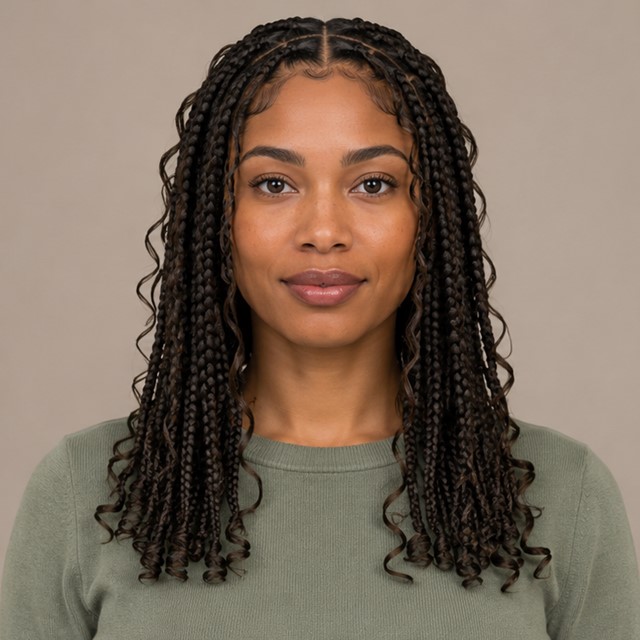
A Fulani-inspired arrangement combines fine scalp braids with longer hanging braids. The parting pattern and braid direction are central to the look.
- Talk to your stylist about
- Discuss the exact parting pattern, braid size and length with a braider experienced in this style; ask about comfortable tension.
- Living with the look
- Ask about scalp care, installation time and a comfortable wear period for your own hair.
- A helpful reality check
- A preview cannot predict how your hair will fall, feel or grow. Use it to discuss length and shape, alongside your texture and routine.
What defines Fulani braids?
Fulani braids combine a deliberate scalp-braid pattern with longer individual braids. The direction of the rows and the parting are as important to the silhouette as the final length. This page is an inspiration preset, not a claim to represent every traditional or contemporary variation.
What to look for from the front, side and back
Look first at the placement of the central part and the rows around the temples. The side view shows where the scalp braids transition into hanging length, while the back explains the continuing parting pattern. These are AI reference portraits of one fictional model, not an edit of your photo.
What to confirm with your stylist
Choose an experienced braider and discuss the precise row direction, braid size, added hair, length and optional accessories. Ask for comfortable tension, especially around the hairline, and a scalp-care plan that suits your own hair.
Compare Fulani braids with nearby styles
- Straight-back cornrows
Cornrows can stay close to the scalp in continuous rows; this Fulani-inspired preset also includes longer individual braids and a particular front pattern.
Questions about Fulani braids
Do Fulani braids require beads?
No. Beads and other accessories are optional. Show your braider a separate reference for the parting and any accessories you want rather than assuming one standard version.
KEEP EXPLORING
All hairstyles Compare related styles.
Editorial inspiration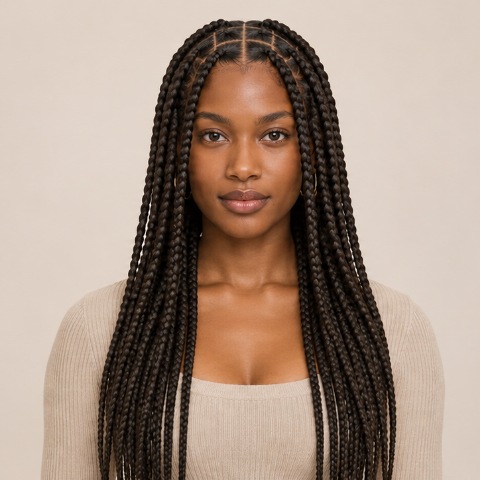 Editorial inspiration
 Editorial inspiration