 Editorial inspiration
Also in: Short hair
A NEW POSSIBILITY
Textured fringe
A longer, piecey fringe falls toward the eyebrows above softly tapered sides. The front stays loose rather than forming a sharp straight line.
- Talk to your stylist about
- Show how much forehead you want covered and ask to compare the fringe after drying.
- Living with the look
- The loose front may need light styling; check how it falls with your growth direction.
- A helpful reality check
- A preview cannot predict how your hair will fall, feel or grow. Use it to discuss length and shape, alongside your texture and routine.
What defines Textured fringe?
A textured fringe leaves more length at the front than a compact crop. The pieces separate and fall toward the eyebrows, while the sides stay softly tapered. Compare the amount of forehead covered rather than treating the messy finish as a fixed cut line.
What to look for from the front, side and back
The front view shows the irregular fringe edge. In profile, compare the weight above the brow with the shorter side. The rear reference clarifies the softer taper at the nape. These are AI reference portraits of one fictional model, not an edit of your photo.
What to confirm with your stylist
Ask your barber to set the dry fringe length, the amount of separation and the height of the side taper. Bring a photo of your natural parting and ask whether your own wave pattern will fall forward without daily styling.
Compare Textured fringe with nearby styles
- Curly fringe
Both place emphasis above the brow. Textured fringe uses looser, piecey waves; curly fringe keeps distinct curls at the front.
Questions about Textured fringe
Can I keep the front off my eyes?
Yes, discuss a shorter dry fringe length and how it grows between trims. A preview cannot determine your hair growth direction or the styling needed to hold it.
KEEP EXPLORING
All hairstyles Compare related styles.
Editorial inspiration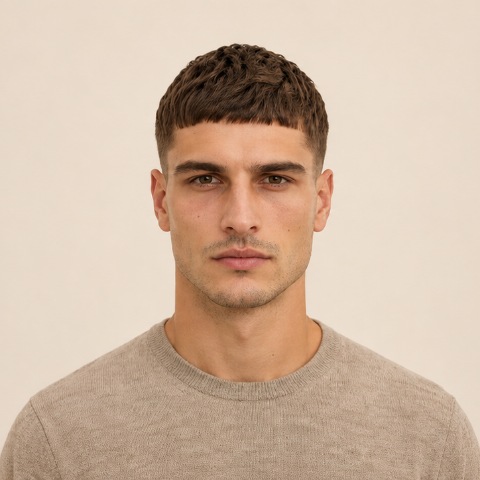 Editorial inspiration
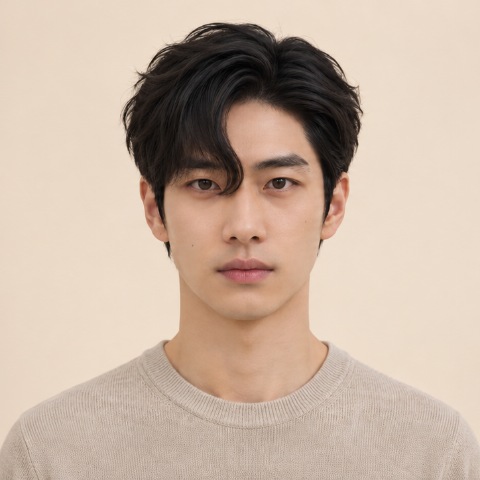 Editorial inspiration